Carrier
1MHz
US PRO 2000 transducer
PULSE turns the US PRO 2000, a handheld 1 MHz ultrasound, into an instrument you program from a phone. Pick a pulse program from a signed library, load it in seconds over NFC, and run timed sessions at three intensities. For a study, we build the program with you.
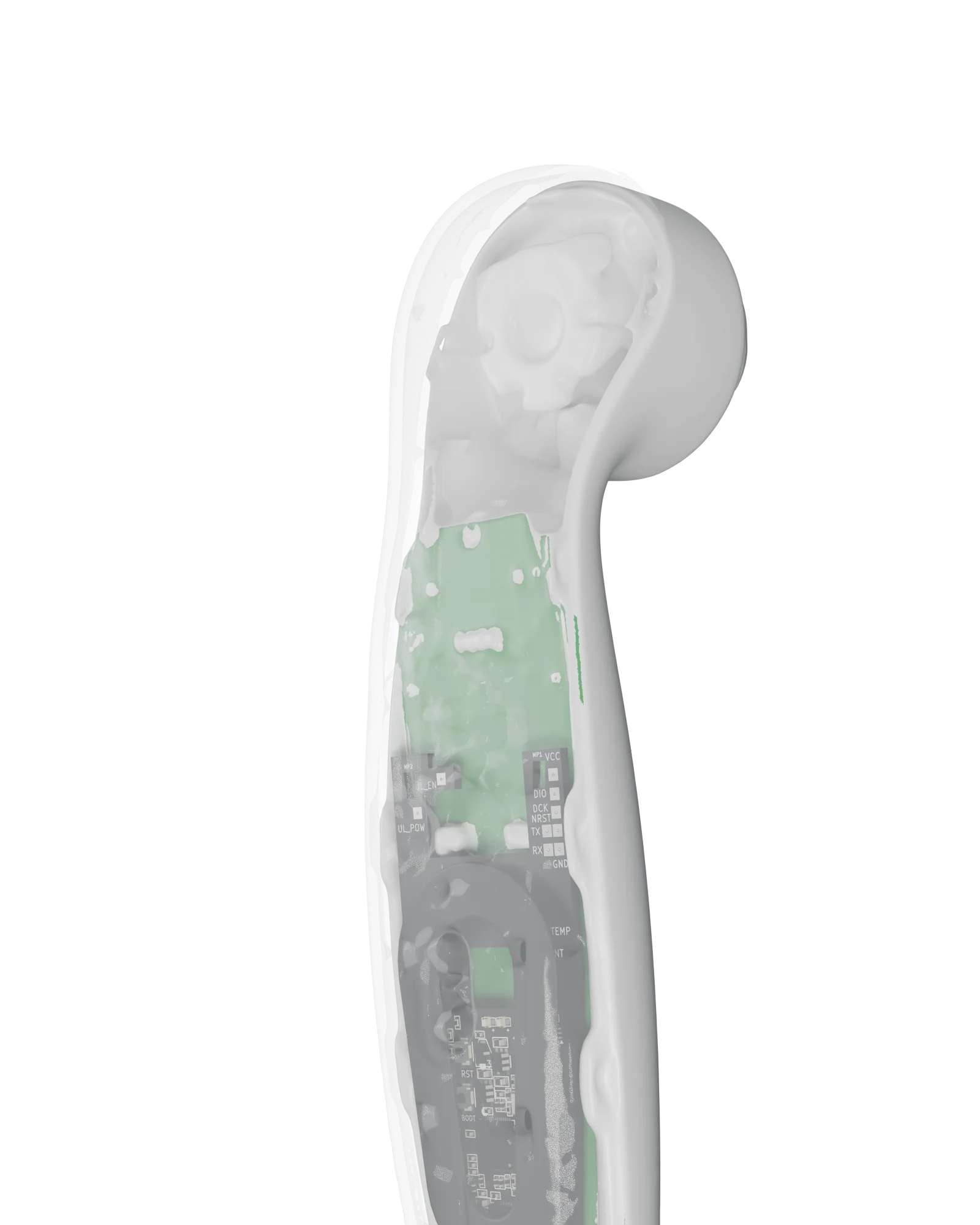 3D · FROM SCAN + CAD
A program goes from your account to the phone, over NFC into PULSE, and PULSE programs the ultrasound. Here is each part, in the order a program travels.
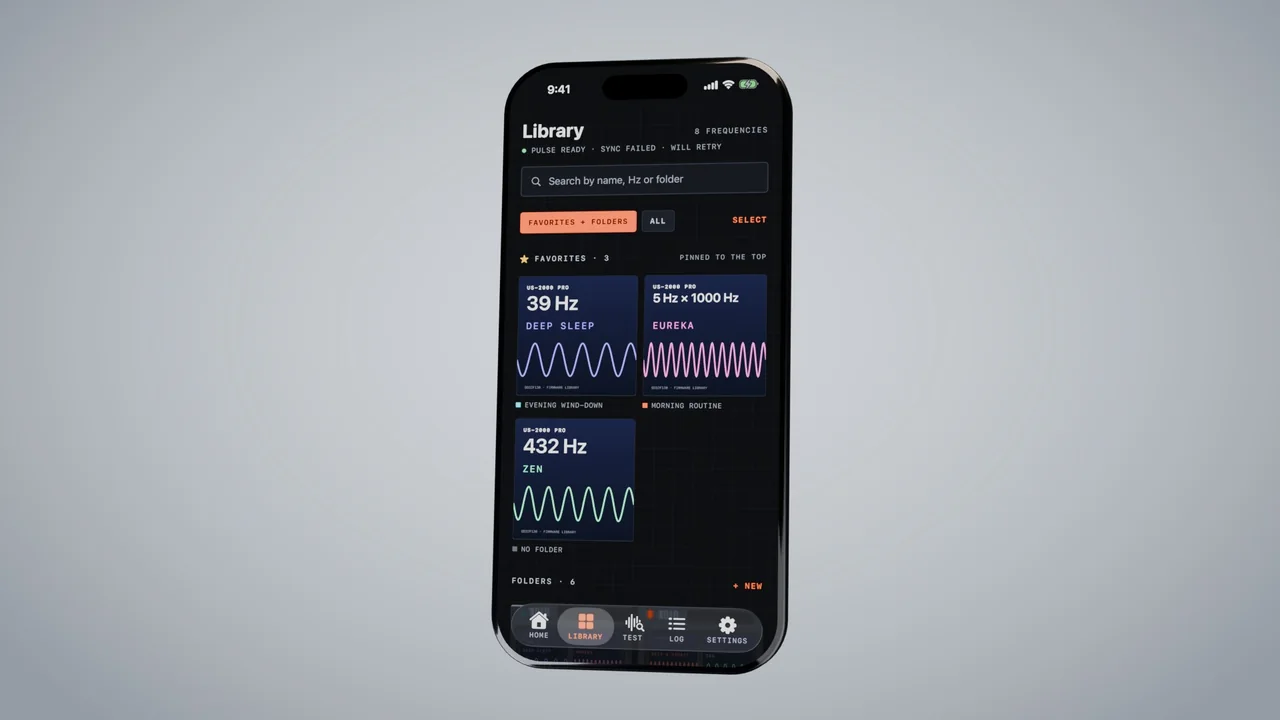
39 programs in the library today. Each is a firmware image signed by UltraDAO and checked on the device before it runs.
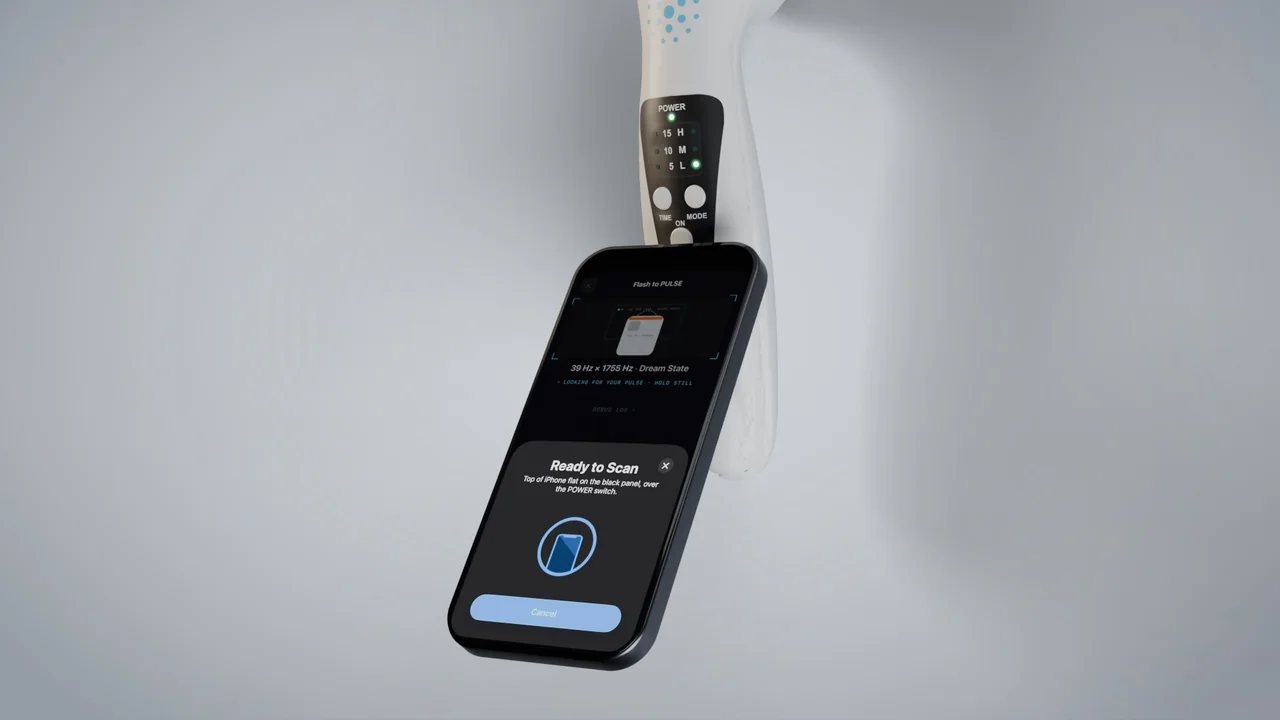
The UltraNFC app for iPhone and Android holds your library. Hold the phone to the POWER switch and the program goes over NFC; the app reads it back to confirm.
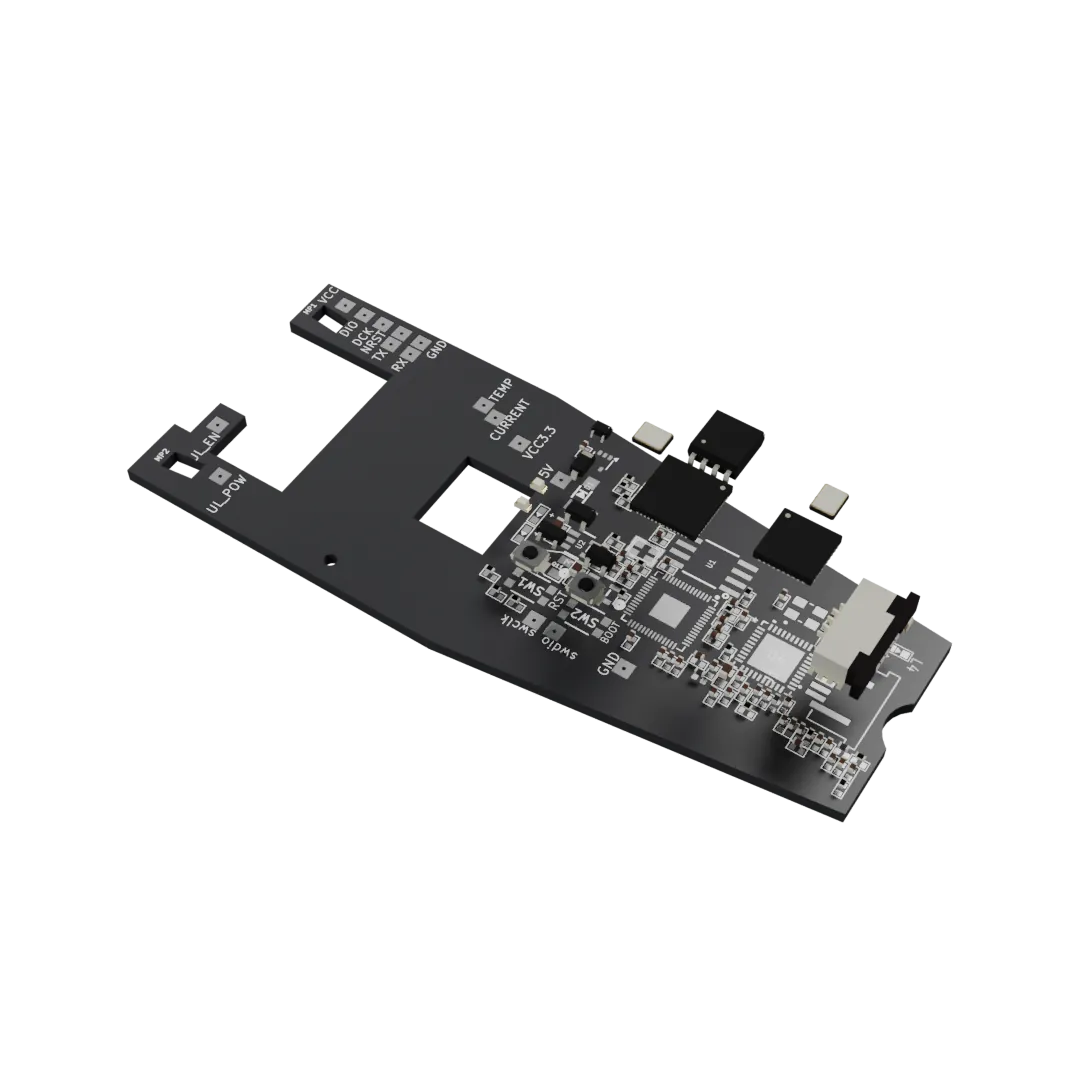
Under the front panel: a PN7150 NFC front end, W25Q64 flash and an RP2040 that programs the instrument. Six spring pins connect it; nothing is soldered.
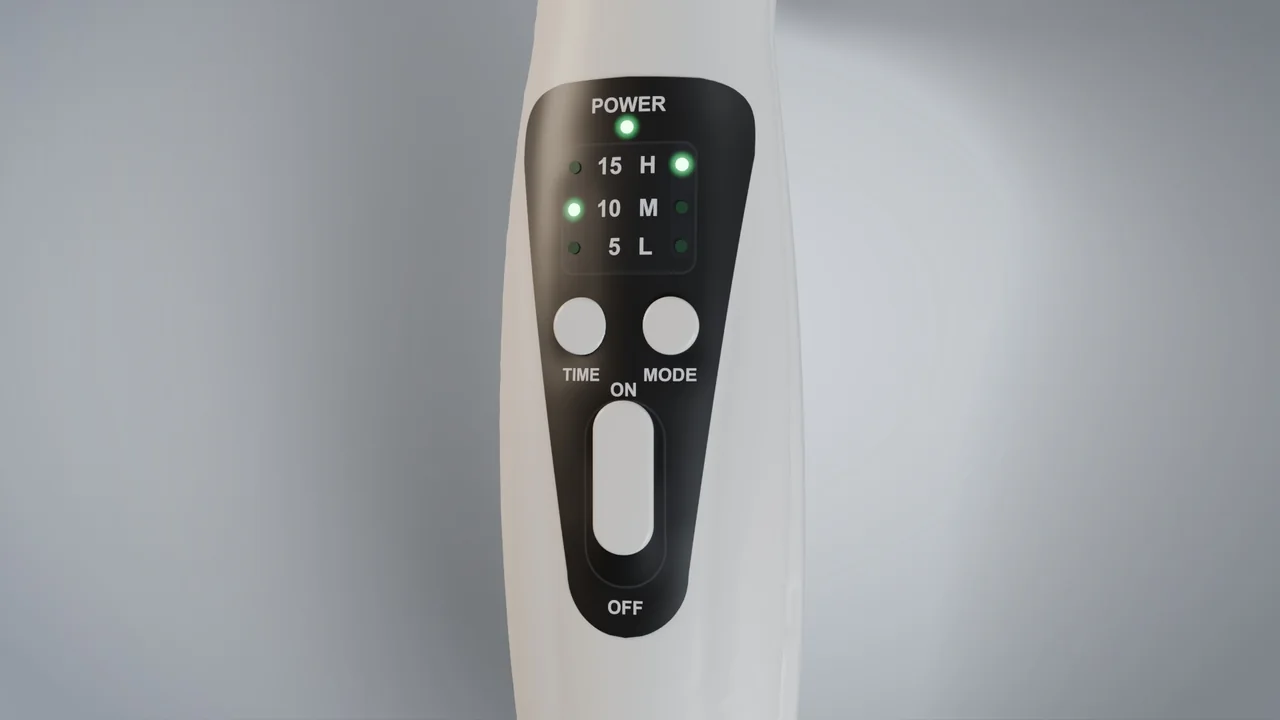
A Ø24 mm piezo transducer at 1 MHz, 0.08–1.6 W/cm² in steps, about 40 mm effective depth in soft tissue. MODE sets the intensity, TIME a 5, 10 or 15 minute session.
See it come apart, part by part · PULSE anatomy →
Switching protocols means loading a different program, not re-cabling a rig. These are the families in the library right now.
One pulse rate each. 33 of them are included with every account.
A slow burst rate, each burst a train of pulses at about 1 kHz.
One frequency nested inside another.
Your study needs a program that isn’t here?We build it with you.
A program is written to flash and checked against keys provisioned by UltraDAO. A bad signature never lands.
After each load the app reads the program back from the device and only then says Installed and verified.
Sessions are set on the device itself (5, 10 or 15 minutes) and counted down on its lights.
Programmable pulsed ultrasound usually means a research system costing $10,000 or more, or a signal chain built on a bench. In many cases, PULSE matches them in one hand.
| Research system or bench rig | PULSE | |
|---|---|---|
| What it costs | Often $10,000 or more, or a signal generator, an RF power amplifier and a matched transducer bought separately | The US PRO 2000 with PULSE installed, $299 · research packages are built with you |
| Changing the protocol | Re-set the generator by hand | Load another program from your phone, in seconds |
| Where it works | On the bench, cabled together | Handheld, on its own power cable |
| Checking the program | By hand | Every load signature-checked and read back from the device |
| Programs | Anything the instruments can produce | The signed library, on a 1 MHz carrier |
The transducer face is 24 mm across, wider than a mouse’s head, so a session covers a broad area rather than one structure. Plan positioning and coupling with that in mind.
Animal work is subject to your institution’s animal-care approvals (IACUC or equivalent). PULSE is sold for research and development use only; it is not a medical device and not FDA cleared.
Tell us what you are planning, and we work out the program and the setup with you as part of your research package.
A study is more than a device. We scope each research package with you: the programs your protocol needs, the hardware, and the support to run it.
What you want to study, and the questions you want answered.
We build and sign the pulse programs your protocol calls for, alongside the library.
Hardware, programs and support, put together for your study and quoted for it.
Email us what you want to study and the questions you have. We will come back with a research package built around it.