
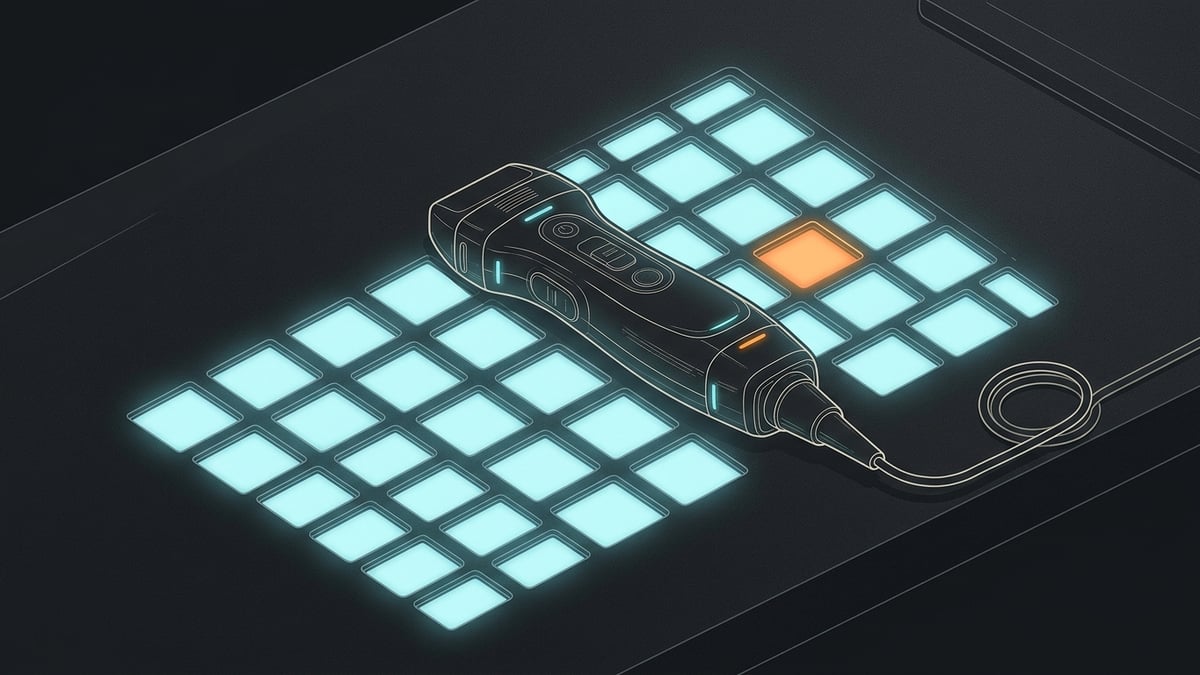
The Ultrasound Memory Study is a research study conducted by the team at Ultrasound DAO in partnership with IONS, and described on our study pages as IRB-approved. It asks one question: whether targeted, low-intensity ultrasound delivered by the US PRO 2000 device can be used safely in the context of short-term memory recall and cognitive performance. That sentence is worth reading twice, because it is a question, not a finding. The study exists to gather evidence. It has not produced any, and nothing in this post should be read as a result.
This post is for people who are considering participating. It explains what the study asks of you, what the protocol looks like week by week, who is eligible, and — just as important — what a study of this design can and cannot tell us. We would rather describe it plainly than dress it up.
The question under study
The device at the center of the study is the US PRO 2000, a handheld therapeutic ultrasound unit. Ultrasound neuromodulation — the use of low-intensity sound to influence neural activity — is an active area of academic research, and the question of whether it can be studied safely in cognitive contexts is one that a number of research groups are exploring. Our study sits inside that field at a deliberately modest scale: at-home use, structured self-report, and careful record-keeping.
What the study does not do is start from a conclusion. We are not asserting that ultrasound improves memory, and no one should enroll expecting a treatment. Participants are helping us evaluate whether a protocol like this can be followed safely and consistently at home, and whether the data it generates are worth building on.
The protocol, as published
The published protocol has three parts:
- Device sessions. At-home use of the US PRO 2000 three times a day for three weeks, followed by one week off.
- Surveys. A survey before starting, and then monthly, covering memory, mood, and quality of life.
- Daily check-in. A short daily assessment about your device usage and symptoms.
The design is intentionally light-touch. Everything happens from home, on your own schedule, with the surveys completed online. Participation is voluntary and there is no cost to participate.
Who is eligible
The eligibility criteria, as listed on the study resources page:
- English-speaking adults aged 18 or older who are experiencing memory or cognitive challenges.
- Able to provide informed consent, personally or through a caregiver.
- Internet access, since the surveys are completed online.
- A letter from your doctor approving your participation, provided before you are enrolled.
- A US Pro 2000 device.
The doctor's letter is deliberate. We want a clinician who knows your history in the loop before you begin, not after. And the device requirement is simply practical: the protocol is built around this specific unit, so the study cannot enroll you without one.
What this study is, and what it is not
As published, the participant materials describe an at-home, survey-based design in which every participant follows the same protocol. The data are self-reported: how your memory, mood, and quality of life seem to you, recorded on a regular schedule, alongside a daily log of usage and symptoms. No comparison group, imaging, or in-clinic testing appears in the published materials.
A survey-based study cannot prove that anything works. What it can do is show whether a protocol is tolerable, whether people actually stick with it, and whether the patterns in the data justify something more rigorous.
That is the honest value of this design. It is a first step, not a definitive trial. If the field ever gets a definitive answer about ultrasound and cognition, it will come from larger, controlled studies — and careful groundwork like this is how a small research organization earns the standing to propose them. We think that is worth stating up front, because a participant who understands the design is a better participant, and because overselling a study is the fastest way to undermine it.
How to participate
Enrollment runs in three steps:
- Physician authorization. Download the authorization form from the study resources page and have your doctor complete it.
- Participant form. Complete the online intake and consent form to register your interest and provide the required health information.
- Register for updates. Create an account to receive study notifications, protocol updates, and onboarding instructions.
After you submit the forms, the research team reviews your application and reaches out with next steps. Privacy and safety of participants are maintained throughout, and participation remains voluntary at every stage.
The study overview lives at the study page, and every form, protocol document, and reference file is linked from the study resources page. For background on the broader research directions this work fits into, see our research page. If you are experiencing memory or cognitive challenges and this study sounds like something you would want to be part of, start with the resources page and talk to your doctor. That conversation is the real first step.
UltraDAO devices and frequency programs are wellness and research instruments. The PULSE system is not a medical device, is not FDA cleared, and nothing in this post is medical advice — no therapeutic claims are made, and the memory study described here is evaluating a question, not reporting a result. Ultrasound neuromodulation is an active area of research; consult a qualified clinician for health decisions.