
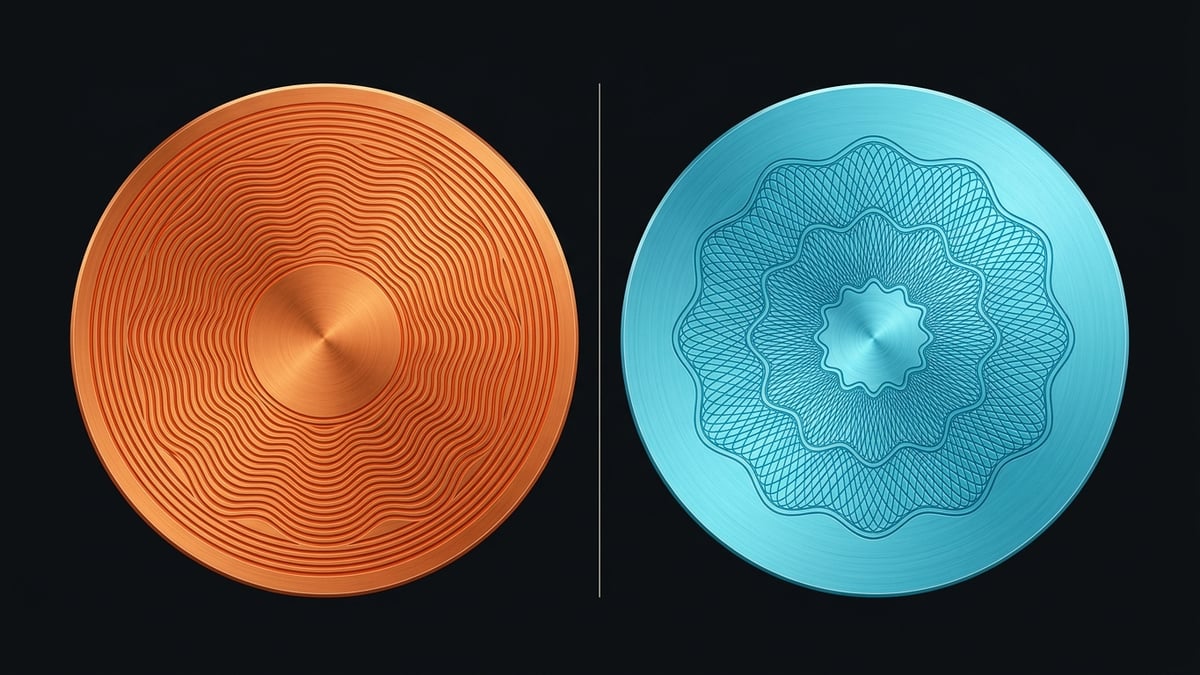
UltraDAO has two tokens, and the clearest thing we can say about them is that they are not two flavors of the same idea. $ULTRA is money you spend. UXDT is a share you hold. They are acquired differently, held for different reasons, and do different jobs — and keeping those jobs separate is a deliberate design decision, not an accident of history.
This post describes both tokens by function. It also tries to be precise about tense: some of what follows is running today, and some of it is where the design is headed but has not shipped. We would rather draw that line plainly than let the future tense pass as the present.
$ULTRA: the spending token
$ULTRA is deployed as a KRC-20 token on Kaspa. We chose Kaspa for its GhostDAG architecture and fast transaction settlement — the properties that matter for a network expected to carry many small payments rather than a few large ones.
The token's designed role is narrow on purpose: it is the currency of the device. The UltraDAO library is a catalog of frequency programs — small signed firmware images that flash onto a PULSE-modified US PRO 2000 with a single NFC tap. In the intended model, that flash economy runs on $ULTRA: you hold some, you spend a little when you load a program onto your device, and the token never needs to be anything grander than working money.
Here is the honest present tense. Today, purchases happen on the website in dollars, through ordinary card checkout — a paid frequency costs $10, and it lands in your library in the UltraNFC app, ready to flash. In-app pricing denominated in $ULTRA is the direction the design is headed, not where it stands. We built the catalog, the signing pipeline, and a payment path people already understand first; the token rail comes when it is ready, and we will say so plainly when it does.
UXDT: a certificate, a share, a vote
UXDT is a different instrument entirely. It is a voting stock certificate in UltraDAO LLC, a Wyoming DAO corporation — a corporate form Wyoming law provides for — and it is bought with KAS, the same currency the DAO's treasury is held in. The certificate is not a metaphor: it is an ownership share in the LLC, with a vote attached.
Holding UXDT means two things: an ownership share in the LLC, and a vote on the direction of the research — what gets studied, and how the work evolves. It is worth being precise about the present here too: as we write this, no proposal is on the floor and no vote has been taken. The certificate describes a governance structure, and the structure is early. We would rather describe it plainly than dress it up.
Voting is not the same as ownership
Our DAO page draws a distinction that is easy to skate past and worth slowing down for. There are two separate ideas inside any structure like this: voting, which is a say in the direction of the research organization, and ownership, which is a stake in what the project produces.
Voting is about stewardship of the work. Ownership is about a share in what the work produces. Someone may hold one, the other, or both.
UXDT, like conventional voting stock, carries both attributes in one certificate: the share and the say travel together. $ULTRA carries neither. Spending it does not buy you a vote, and holding it does not make you an owner of anything except the tokens themselves. That asymmetry is the whole point of having two tokens instead of one.
Why the separation keeps incentives legible
A spending token has one job and one test: does it work as money for the thing it buys? A share has a different test: is the work worth owning a piece of, and worth stewarding well? Those are different questions, asked on different timescales, by people in different postures — a person mid-session with a device in hand, and a person thinking about a research agenda measured in years.
When a single token tries to be both, the questions contaminate each other. Every purchase becomes a speculative position whether the buyer wanted one or not. Every governance decision acquires a shadow agenda about the token itself. People who only wanted the product end up exposed to dynamics they never asked for, and stewards end up managing a currency instead of a research direction.
Separating the two keeps each instrument honest. Someone who wants frequencies for their device can treat payment — $ULTRA in the intended design, a card checkout today — as exactly what it is. Someone who cares where the research goes holds the instrument built for that, with rights and obligations spelled out in a corporate form a state recognizes. And someone may, of course, do both. Nothing in this design asks you to hold either token; it only asks that when you do, you know which question you are holding an answer to.
The concise version of the two-token model lives at /token. The fuller account of how the organization itself is structured — what a DAO is, and how ownership works here — is at /dao. The device the spending token is designed to serve is described at /device.
This post is informational only. It is not an offer to sell, or a solicitation of an offer to buy, any token or security, and it is not investment, legal, or tax advice. Nothing here is an invitation to vote or to transact.